
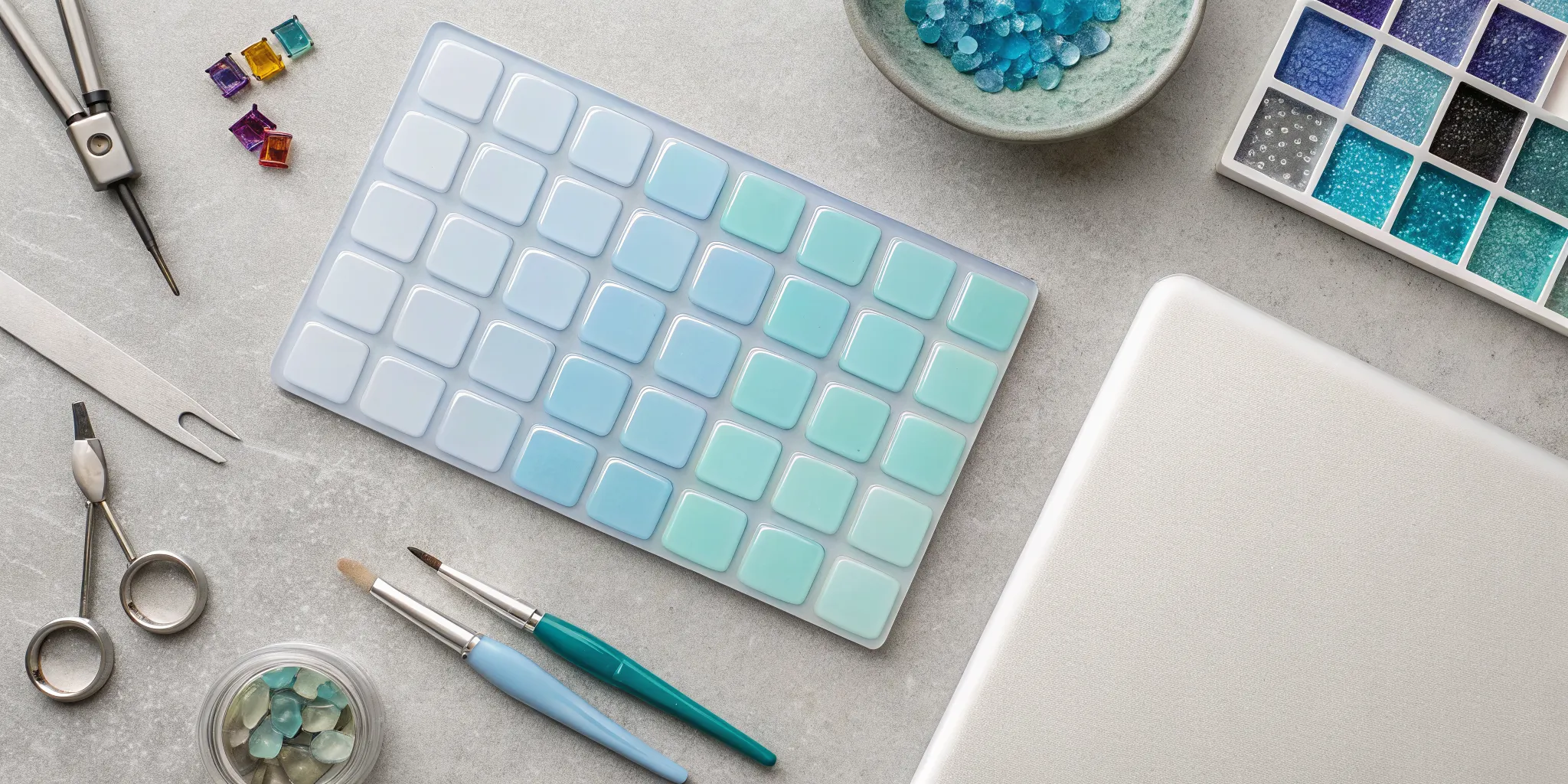
If you have a creative spark, glass fusing offers a unique way to express yourself. It’s a process where you become both an artist and a scientist, carefully selecting colors and shapes before the kiln does the heavy lifting. The satisfaction of seeing your vision turned into a solid, sparkling piece of art is unmatched. This guide is designed to explain glass fusing basics, process, and beginner projects in a clear, step-by-step way. Think of it as your personal fusing tutorial, covering the essential techniques you need to start creating with confidence.
Key Takeaways
- Stick to One Glass System: Your success hinges on one rule: use glass with the same Coefficient of Expansion (COE) for each project. To prevent cracks, build your collection around either COE90 or COE96 glass and never mix the two.
- Treat Firing Schedules Like a Recipe: Learn how different temperatures create different effects, like a textured tack fuse or a smooth full fuse. Always follow a complete schedule that includes a slow cooling phase, called annealing, to make your final piece strong and durable.
- Prep Work and Safety are Essential: Set yourself up for a great result before you fire. Start with spotlessly clean glass and a prepared kiln shelf to prevent sticking, and make safety gear like glasses and heat-resistant gloves a non-negotiable part of your creative routine.
What Is Glass Fusing?
At its heart, glass fusing is the art of joining pieces of glass together using heat. It’s a creative process where you arrange layers of special glass and heat them in an oven, called a kiln, until they melt and bond into a single, beautiful piece. This happens at very high temperatures, typically between 1,292°F and 1,510°F.
Don’t let the high temperatures scare you. With the right tools and a little guidance, anyone can learn to fuse glass. You can create everything from colorful jewelry and custom coasters to intricate plates and decorative art. It’s a fantastic way to turn simple sheets of glass into your own unique creations.
Why Beginners Love Glass Fusing
Glass fusing is one of the most approachable ways to start working with glass. Unlike glassblowing, which requires you to shape molten glass in real-time, fusing lets you take a more measured approach. You get to be a designer first, carefully arranging your pieces before the heat does its work. This makes it a perfect entry point for artists of all skill levels. The process is straightforward, the results are often stunning, and the creative possibilities are nearly endless. It’s an art form that invites you to play with color and light in a tangible way, offering a deeply rewarding experience from your very first project.
Designing While the Glass Is Cold
One of the best parts about glass fusing is that all your creative work happens while the glass is cold and stable. You can take all the time you need to arrange your design without the pressure of a ticking clock or intense heat. This allows you to experiment freely, placing pieces of colored glass, sprinkling on fine glass powder called frit, or adding delicate stringers to create your pattern. If you don’t like how something looks, you can simply move it. This calm, controlled process lets you focus entirely on your artistic vision, making it an ideal environment for learning and building confidence before you even turn on the kiln.
A Forgiving and Fun Art Form
Glass fusing is also incredibly forgiving, which is a huge relief when you’re just starting out. You don’t have to get everything perfect. Sometimes, the most beautiful outcomes are happy accidents that happen inside the kiln. The way the glass melts and flows can soften edges, blend colors in unexpected ways, and turn a simple arrangement into something truly special. Even if you feel like you rushed a design, the firing process has a way of working its magic. This takes the pressure off and encourages you to experiment without fear of failure, making it a genuinely fun and satisfying art form to explore.
A Key Principle: The 1/4-Inch Rule
As you begin fusing, there’s one core principle you’ll want to remember: glass naturally wants to be about 1/4 inch (or 6mm) thick when it reaches a full fuse temperature. Understanding this rule is key to getting smooth, consistent results. The easiest way to achieve this thickness is by stacking two layers of standard 3mm glass. For example, you could use a solid sheet of COE90 glass as your base and add cut pieces of compatible glass on top. If your project is too thin, it might pull in on itself during firing, creating uneven edges. If it’s too thick, you risk trapping air bubbles or ending up with a bulky piece. Sticking to the two-layer guideline is a simple way to set yourself up for success.
Breaking Down the Glass Fusing Process
Think of glass fusing as building with colorful, breakable puzzle pieces that you melt together. The basic process is straightforward: you stack two or more layers of compatible glass to create a design, then place your creation into a kiln where it fuses together. To get started, you’ll prepare your workspace, cut your glass into the desired shapes, and carefully assemble the pieces.
Once your design is ready, you’ll fire it in a kiln following a specific temperature schedule. After the glass reaches its melting point, it must cool down very slowly in a process called annealing. This slow cooling prevents stress and keeps the finished piece from cracking. Using compatible glass, like COE90 glass, is critical for a successful fuse.
Understanding Tack, Full, and Slump Fusing
As you get into glass fusing, you’ll hear about different types of fuses that create different results. The main ones to know are tack fusing, full fusing, and slumping. A tack fuse uses lower temperatures to stick the glass pieces together while letting them keep most of their original shape and texture. The layers are joined, but they remain distinct.
A full fuse uses higher temperatures to melt the glass layers until they flow together into one smooth, flat surface. This is great for creating a seamless look. Slumping is a technique used after your glass is fused. You place your flat, fused piece over a ceramic or stainless steel mold and heat it again until it softens and “slumps” into the shape of the mold, creating a bowl, plate, or other three-dimensional object.
What You Need to Start Fusing Glass
Getting your first set of tools is one of the most exciting parts of starting a new hobby. With glass fusing, having the right equipment not only makes the process smoother but also opens up a world of creative possibilities. Think of it as setting up your artist’s palette. You don’t need every single tool on the market to start, but a few key pieces will set you up for success. Let’s walk through the essential items you’ll want in your studio to start creating beautiful fused glass art.
Which Kiln Is Right for You? Microwave vs. Professional
Your kiln is the heart of your fusing studio, and you have a couple of options to start. Many beginners are drawn to small microwave kilns because they’re affordable and don’t take up much space. They are perfect for making small items like jewelry and learning the basics. As your skills grow, you might find yourself wanting more control and space. That’s when many artists graduate to larger, electric kilns. These professional models give you precise temperature control and the versatility to create larger, more complex pieces. Your choice really depends on your budget, your available space, and the kind of art you dream of making.
Using a Ceramics Kiln for Glass
If you already have a ceramics kiln, you might be wondering if you can use it for glass. The short answer is: maybe, but it comes with challenges. The main difference isn’t the heat itself, but how it’s controlled. Ceramics are often fired with a simple, rapid heat-up and a natural cool-down. Glass, however, is much more sensitive. It requires a precise firing schedule with slow temperature increases and a very controlled cooling phase, called annealing, to prevent thermal shock and cracking. Without this precision, your beautiful projects can easily break.
Many ceramics kilns lack the sophisticated digital controllers needed to manage these specific schedules. While some can be retrofitted, you run the risk of inconsistent results and wasted glass. For reliable, stress-free fusing, it’s best to use kilns designed for glass. They give you the exact control you need to achieve everything from a textured tack fuse to a smooth full fuse, ensuring your finished pieces are strong and beautiful every time. Investing in the right tool from the start saves a lot of frustration down the road.
The Essential Tools for Cutting Glass
To create your own designs, you’ll need to cut glass. This isn’t as intimidating as it sounds, especially with the right tools. The two most fundamental tools are a glass cutter and breaking pliers. The glass cutter doesn’t actually cut through the glass; it scores a precise line on the surface. Then, you use breaking pliers to apply gentle, even pressure to snap the glass cleanly along that scored line. Investing in a quality cutter will make a world of difference in getting clean, predictable breaks. These tools are the foundation for moving beyond precut shapes and bringing your unique ideas to life.
Helpful Tools: The Glass Grinder
After you’ve made your initial cuts, you’ll notice the edges can be sharp or slightly uneven. This is where a glass grinder becomes an essential part of your toolkit. Think of it as a sander designed specifically for glass. It uses a diamond-coated grinding head to smooth away rough edges, ensuring your pieces are safe to handle and fit together perfectly. This precision is especially important when you’re assembling a design with multiple components, as clean edges create a seamless, professional look in your finished project.
A grinder also gives you incredible creative control. It allows you to shape curves and fine-tune angles that are difficult to achieve with a glass cutter alone. This tool is what lets you move from simple geometric shapes to more organic and intricate designs. While you can make your first few projects without one, you’ll quickly find that a grinder is key to helping you refine your pieces and bring more complex artistic visions to life.
Choosing Molds to Shape Your Glass
If you want to create three-dimensional pieces, you’ll need molds. Using molds is a key technique for turning flat sheets of glass into functional items like bowls, plates, and dishes. This process is called “slumping,” where you heat the glass just enough for it to soften and slump into the shape of the mold beneath it. Molds come in a huge variety of shapes and sizes, from simple circles and squares to intricate, decorative forms. They are typically made of ceramic or stainless steel and can be used over and over again, giving you endless opportunities to experiment with form.
Kiln Accessories You’ll Actually Use
To get a successful fuse, a few accessories are non-negotiable. The most important are kiln paper and kiln wash. Think of these as baking paper for your glass projects. You place kiln paper on your shelf or apply a coat of kiln wash before firing. This creates a protective barrier that prevents the molten glass from sticking to your kiln shelf. Without it, you could ruin both your project and your shelf. Other helpful accessories include kiln posts, which let you add more shelves to your kiln, and a good pair of heat-resistant gloves for handling items safely.
Learning the Ropes: Classes vs. a Home Studio
When you’re ready to start fusing glass, you’ll face a common question: should you take a class or set up a studio at home? Taking a class is a fantastic way to learn the fundamentals from an experienced instructor. You get hands-on guidance, learn safety best practices, and can use professional-grade equipment without the upfront cost. It’s a structured environment that helps you build a solid foundation. On the other hand, creating a home studio gives you the freedom to experiment whenever inspiration strikes. You can start small with a microwave kiln for jewelry and gradually build your collection of tools and glass. This path allows you to learn at your own pace and develop a personal workflow right from the start.
How to Choose the Right Glass
Picking the right glass is one of the most exciting parts of starting a new project, but it’s also where a little knowledge goes a long way. To make sure your beautiful design doesn’t crack in the kiln, you need to understand one key concept: glass compatibility. Once you have that down, you can have fun exploring all the colors and forms glass comes in.
What Is COE and Why Does It Matter?
Think of the Coefficient of Expansion (COE) as the language your glass speaks. It’s a measurement of how much glass expands when heated and shrinks when cooled. For a successful fusion, all the glass pieces in your project must speak the same language. If you mix glass with different COEs, they will expand and contract at different rates inside the kiln, causing stress and, ultimately, a cracked piece. It’s a heartbreaking lesson many new artists learn the hard way.
To keep things simple, most glass for fusing is made to a specific COE standard. Sticking with glass from a single manufacturer is a great way to ensure compatibility, as they formulate their products to work together seamlessly. Always check the COE before you buy, and keep your glass organized by its COE number to avoid any mix-ups.
COE90 vs. COE96: What’s the Difference?
When you start shopping, you’ll immediately notice two main teams: COE90 and COE96. So, what’s the difference? Honestly, not much in terms of quality or what you can make. Neither one is better than the other; they are just different systems. COE90 glass is the standard for many popular brands like Bullseye Glass, while COE96 glass is known for its vibrant color palette and slightly more forgiving nature during firing.
The most important rule is to never mix them. Your decision really comes down to which system you want to invest in. Take a look at the colors and styles available in each, and pick the one that inspires you most. Once you choose your team, stick with it. Building your collection around a single COE will save you a lot of headaches and ensure all your future projects fuse beautifully.
Common Types of Fusible Glass
Beyond the crucial rule of COE, you’ll find that fusible glass comes in different fundamental types and thicknesses. The most common glass used for art is called soda-lime glass, which is specifically formulated to behave predictably in a kiln. You’ll also need to think about how thick you want your final piece to be, as this affects both the firing schedule and the durability of your project. Getting a handle on these basics will help you confidently select the perfect materials for whatever you plan to create, whether it’s delicate jewelry, custom coasters, or sturdy, decorative plates that will last for years.
Soda-Lime vs. Float Glass
When you’re shopping for art glass, you’re almost always looking at soda-lime glass. This is the standard for kiln forming because it’s designed to melt predictably and works well with a huge range of accessories like colorful frit, stringers, and powders. On the other hand, you have float glass, which is the material used for windows and picture frames. While it might be tempting to experiment with a piece of scrap window glass, it’s generally not a good idea for fusing projects. Float glass has a different chemical makeup and isn’t tested for compatibility, meaning it will expand and contract differently than your art glass, leading to stress and cracking.
Choosing a Glass Thickness
Glass for fusing typically comes in sheets about 1/8-inch thick, which is a versatile and easy-to-cut starting point. For most projects, a standard practice is to stack two layers of this 1/8-inch glass, creating a total thickness of 1/4-inch before firing. This double layer provides enough body for the glass to fuse into a solid, durable piece without being too bulky or taking too long to heat. While you can find glass up to 3/8-inch thick for more advanced projects, sticking to the 1/4-inch rule of thumb is a reliable way to get consistent results. It helps ensure your project heats and cools evenly, reducing the risk of thermal shock.
Trusted Brands for Fusible Glass
When you’re investing time and money into a project, the last thing you want is for it to fail because of incompatible materials. That’s why it’s so important to use glass that is specifically labeled “fusible” and to stick with trusted brands. Companies like Bullseye and Wissmach have spent decades perfecting their formulas to ensure every sheet of glass within their system is compatible. This means you can confidently mix and match any colors from their COE90 or COE96 lines, knowing they will fuse together perfectly without any surprise cracks after cooling. This reliability is the foundation of successful glass fusing.
Building your studio around a single, reliable brand is one of the smartest moves you can make as a glass artist. It takes the guesswork out of compatibility and lets you focus on the creative side of things. Here at ArtGlassSupplies.com, we proudly stock a wide variety of fusible glass from these industry-leading manufacturers because we know quality and consistency are key to your success. By choosing a trusted brand, you’re not just buying glass; you’re buying the peace of mind that comes from knowing your materials are designed to work together flawlessly, from the first cut to the final fuse.
Getting to Know Your Glass: Frit, Stringers, and More
Your creativity doesn’t have to stop with sheets of glass. An entire world of accessory glass is waiting to add texture, detail, and flair to your work. These are the fun embellishments that can make your piece truly unique. You can sprinkle on frit, which is crushed glass, to create a speckled, sandy, or watercolor-like effect. It comes in various sizes, from fine powder to chunky bits.
You can also use stringers, which are thin, spaghetti-like glass threads, to draw lines and create intricate patterns. For a touch of sparkle, dichroic glass offers a stunning, metallic shimmer that changes color depending on the angle of light. These are just a few of the options available. Playing with these different stained glass forms is a fantastic way to experiment and develop your personal artistic style.
Tips for a Successful First Project
You’ve got your tools, you’ve picked your glass, and now you’re ready to create something. Your first project is a huge milestone, and with a few simple tips, you can make sure it’s a successful one. The key to a great first fuse isn’t about creating a masterpiece right away; it’s about learning the process and building good habits. By focusing on careful planning and a few fundamental techniques, you can avoid common beginner mistakes and create a piece you’ll be proud of. Let’s walk through the three most important things to keep in mind as you get started.
Plan Your Design Before You Cut
It’s tempting to jump right in and start cutting your beautiful new sheets of glass, but a little patience will pay off. Before you make a single score, take the time to sketch out your design on paper. Even better, draw a few different versions in full color. This simple step helps you work out your ideas, finalize your color choices, and plan your cuts, which saves you from wasting precious glass. Once you have a design you love, you can even cut it out of paper to use as a template. This planning phase is where you can decide if you want to use bold, opaque colors or play with the light-catching qualities of transparent stained glass.
A Beginner’s Guide to Layering
When you’re just starting, a good rule of thumb is to stick to two layers of glass. This usually consists of a solid base piece and a second layer of decorative elements on top. Keeping your project to two layers helps ensure a standard thickness, which is crucial for an even fuse. When glass is too thick or uneven, it can trap heat and air bubbles, leading to stress cracks during the cooling process. By using a consistent, two-layer thickness, you give your project the best chance to heat and cool evenly in the kiln. This simple guideline is one of the most effective ways to guarantee a strong, stable, and beautiful finished piece.
Using Glue to Secure Your Design
Moving your carefully arranged glass project from your worktable to the kiln can be a nerve-wracking moment. To keep your design from shifting, you can use a tiny bit of glue. The key word here is tiny. The glue’s only job is to hold everything in place temporarily; it will burn off completely during firing. Use a toothpick to apply a few microscopic dots of basic white school glue to your base glass before placing your decorative pieces. If you use too much, the glue can leave a faint gray residue trapped inside your finished piece. A “less is more” approach is essential here, ensuring your design stays put without affecting the final clarity and brilliance of your glass.
Your First Glass Fusing Techniques to Learn
Once you have your glass and kiln, the real fun begins. Glass fusing isn’t a single process; it’s a collection of techniques that use different temperatures and setups to create unique effects. Understanding the main approaches will help you plan your projects and bring your creative ideas to life. From creating textured layers to shaping glass into bowls, these fundamental techniques are the building blocks for all your future glass art projects. Let’s walk through the four essential methods every beginner should know.
How to Tack Fuse Glass
Think of tack fusing as using heat to gently glue pieces of glass together. This technique uses lower temperatures, just enough to make the glass elements stick to one another without completely melting. The beauty of tack fusing is that your individual glass pieces will keep most of their original shape, height, and texture. It’s perfect for creating designs with a lot of dimension and visual interest. You can layer different colors and shapes of COE90 glass, and each piece will remain distinct. This method is very forgiving, making it a fantastic starting point for beginners who want to experiment with layering.
Achieving a Full Fuse
If tack fusing is like gluing, full fusing is like welding. This technique requires higher temperatures to melt two or more pieces of glass until they flow together into a single, smooth, and solid piece. All the original edges and textures disappear, leaving you with a flat, glossy surface. A full fuse is ideal when you want to create a seamless background for a larger design, make pendants, or prepare a flat blank that you later plan to shape into a bowl or plate. Achieving a perfect full fuse requires careful temperature control, but it’s a core skill for creating polished and professional-looking pieces.
Shaping Glass with Slumping and Draping
Slumping and draping are what turn your flat, fused creations into three-dimensional art. These techniques are usually done in a second firing, after you’ve already fused your glass flat. To slump glass, you place it on top of a ceramic or stainless steel mold and heat it until it softens and “slumps” down into the mold’s shape, creating a bowl or a dish. Draping is the opposite; you place the glass over a mold, and it melts down and around it. With the right molds, you can create everything from simple plates to elegant, flowing vases, opening up a whole new world of functional art.
Creating Texture with Kiln Carving
Kiln carving is a creative way to add texture and intricate patterns to the surface of your glass. Despite the name, you aren’t actually carving the glass itself. Instead, you cut designs into high-temperature ceramic fiber paper and place your glass on top of it before firing. In the kiln, as the glass softens, it sinks into the cut-away areas of the paper, creating a beautiful embossed or “carved” relief design on the bottom of your piece. It’s a surprisingly simple way to achieve a sophisticated, textured look without needing to do any complex glass cutting.
Decoding Your Kiln’s Firing Schedule
Think of your kiln as an oven and your firing schedule as the recipe. It’s a detailed set of instructions that tells your kiln how hot to get, how long to stay at certain temperatures, and how to cool down. This process is what transforms separate pieces of glass into a single, cohesive work of art. Getting it right is crucial for achieving the look you want and ensuring your finished piece is strong and durable.
Every project will have a slightly different firing schedule based on the type and amount of glass you’re using, the size of your piece, and the specific result you’re aiming for. While it might seem technical at first, you’ll quickly get the hang of it. Most modern kilns come with programmable controllers that make executing a firing schedule incredibly simple. Let’s break down the key stages of the process so you know exactly what’s happening inside that hot box.
What Happens Inside the Kiln? The Firing Stages
As the temperature in your kiln rises, the glass goes through several distinct stages. Understanding these stages allows you to control the final texture and shape of your piece. The main fusing temperatures are generally around 1,350°F to 1,450°F. At the lower end, around 1,350°F, you get a “tack fuse.” Here, the pieces of glass become permanently bonded but keep their individual shapes and defined edges. A little hotter, around 1,400°F, you’ll achieve a “medium fuse,” where the edges soften and round out. Finally, at a “full fuse” temperature of about 1,450°F, the glass pieces melt completely into one another, creating a smooth, flat surface. These temperatures are a great starting point, but always check the recommendations for the specific COE90 glass you are using.
How Long Does Fusing Take?
The time it takes to fuse glass can vary quite a bit, so patience is key. There isn’t one set time; it all depends on the size and thickness of your project, the type of glass you’re using, and the final look you want to achieve. A small project, like a pair of earrings, might take only three to four hours from start to finish. A larger, more complex piece, like a thick plate, could easily spend 12 hours or more in the kiln. A significant portion of this time is dedicated to the slow cooling process, known as annealing. This critical step prevents stress fractures and ensures your finished art is strong and stable. The total duration is determined by your specific firing schedule, which is carefully designed for a successful outcome.
Annealing: How Cooling Makes Glass Stronger
After the glass reaches its top temperature, it can’t just cool down rapidly. It needs to go through a critical stress-relief process called annealing. During fusing, the glass molecules get pretty excited and spread out. If the glass cools too quickly, the outer surface shrinks faster than the inside, creating internal stress that can cause it to crack later. Annealing involves holding the glass at a specific temperature (usually around 900°F to 1000°F) for a set period. This allows the temperature to even out across the entire piece, letting the molecules relax and settle into a strong, stable structure. It’s a non-negotiable step for creating durable glass art that will last.
How to Create a Firing Schedule
A firing schedule is your roadmap for the entire heating and cooling process. It’s unique to your project, depending on the size, thickness, and type of glass you’re using. For example, a small pendant will fire much faster than a large, thick bowl shaped with a mold. A great starting point is to use the firing schedules provided by the glass manufacturer. As you gain experience, you’ll learn how to adjust these schedules for your specific kiln and projects. It’s a fantastic idea to keep a firing log or journal. Note the type of glass, the size of the project, the schedule you used, and the results. This record will become your personal guide to predictable, successful firings.
How to Prep Your Kiln and Glass for Firing
You’ve cut your glass, designed your piece, and you’re ready for the magic to happen inside the kiln. This is an exciting moment, but don’t rush it. Taking the time to properly prepare your glass and kiln is one of the most important steps in the entire fusing process. Think of it as setting the stage for a perfect performance. Any dust, fingerprints, or improper placement now can lead to disappointing results later. A little bit of prep work ensures your final piece comes out clean, beautiful, and exactly as you envisioned.
Proper preparation prevents your glass from sticking to the kiln shelf and ensures that no unwanted textures or blemishes mar your finished project. It’s a simple but critical phase that involves three key tasks: cleaning your glass until it sparkles, preparing your kiln shelf to create a non-stick surface, and carefully loading your project into the kiln. Getting these steps right will give you the confidence that you’ve done everything you can to guarantee a successful firing. Let’s walk through each one so you know exactly what to do.
How to Properly Clean Your Glass
Before it goes into the kiln, your glass needs to be spotless. And I mean spotless. Any specks of dust, smudges, or oils from your fingers can become permanently fused into your artwork, leaving little marks and blemishes. To get a pristine clean, grab a spray bottle with an ammonia-free glass cleaner or denatured alcohol and some lint-free cloths. Spray the cleaner directly onto the cloth, not the glass, to avoid getting liquid between your layers.
Wipe down every surface of your COE90 glass pieces, including the front, back, and all the edges. Once you’ve cleaned a piece, try to handle it only by the edges to prevent new fingerprints. It’s a small detail that makes a huge difference in the clarity and quality of your final fused project.
A Simple Trick for Removing Marker Lines
If you use a permanent marker to draw your cutting lines, you know how stubborn those marks can be. While you definitely want them gone before firing, scrubbing away at your glass isn’t ideal. Here’s a little studio hack that works like a charm: hand sanitizer. The alcohol in the sanitizer is fantastic at breaking down the ink. Just put a small dab on a lint-free cloth and wipe the marker line away. It’s surprisingly effective! After the marker is gone, be sure to give the entire piece one last wipe-down with your regular glass cleaner or denatured alcohol. This final step ensures you remove any leftover residue from the sanitizer, leaving your glass perfectly clean and ready for the kiln.
How to Prepare Your Kiln Shelf
The next step is to make sure your glass doesn’t become one with your kiln shelf. To prevent this, you need to create a barrier between the two. You have two great options for this: kiln wash or kiln paper. Kiln wash is a liquid mixture that you paint onto the shelf in several thin, even coats, letting each one dry before applying the next. It’s a cost-effective method, but it requires a bit of patience.
For a quicker and easier solution, I highly recommend using kiln firing paper. This is a special paper that you simply cut to size and place on your shelf. It’s a single-use product, but it provides a perfectly smooth surface for your glass and makes cleanup a breeze. Whichever method you choose, a properly prepared shelf is essential for protecting both your project and your kiln accessories.
Best Practices for Loading Your Kiln
With your glass clean and your shelf prepped, it’s time to load your project into the kiln. Carefully place your assembled glass design onto the center of the kiln shelf. Be sure to leave at least an inch of space between your project and the kiln walls to allow for proper heat circulation. If your piece is too close to the heating elements, it can heat unevenly.
If you’ve created a complex design with multiple small pieces, you can use a tiny dab of fuser’s glue to hold everything in place during the transfer to the kiln. The glue will burn off cleanly during firing. When stacking layers for a full fuse or placing glass into molds, double-check that everything is stable and won’t shift as you close the kiln lid.
The One-Shelf-at-a-Time Rule
As tempting as it might be to maximize your kiln space, it’s best to stick to the one-shelf-at-a-time rule, especially when you’re new to fusing. Firing a single shelf ensures your project gets consistent, even heat from all sides. When you stack multiple shelves, the heat distribution can become uneven, which might cause one part of your piece to fuse differently than another. This simple practice is a key part of proper preparation and helps you get predictable results from your firing schedule. By giving your project its own dedicated space in the kiln, you give it the best possible chance to fuse beautifully and evenly, just as you planned.
Glass Fusing Safety: Don’t Skip These Steps
Let’s talk about safety. It might not be the most glamorous part of glass art, but getting your safety habits right from the beginning is the single best thing you can do for your new hobby. It’s not about being scared of the process; it’s about being smart so you can relax and focus on creating beautiful things. A few simple precautions and the right gear are all it takes to make your studio a safe, creative space. We’ll walk through everything you need, from what to wear to how to set up your kiln, so you can fuse with confidence.
Must-Have Protective Gear
First things first: protect your eyes. Always wear safety glasses when you’re cutting, handling, or even just near glass. Tiny shards can fly farther than you think, and your eyes are too precious to risk. Next, get a good pair of heat-resistant gloves. You’ll need them for handling hot kiln shelves or opening a warm kiln. While you’re at it, make it a habit to wear closed-toe shoes in your workspace to protect your feet from any dropped glass. An apron is also a great idea to keep glass dust off your clothes. Think of this gear as your artist’s uniform; it gets you ready to create safely.
Protecting Your Hands and Lungs
Beyond heat-resistant gloves for your kiln, consider a pair of lightweight, cut-resistant gloves for handling and cutting glass sheets. They can save you from small, annoying nicks and give you more confidence when working with large pieces of stained glass. Just as important is protecting your lungs. When you cut, grind, or work with glass powders like frit, you create fine dust that you shouldn’t breathe in. Always wear a dust mask—a simple N95 respirator is perfect—during these activities and when you’re cleaning your studio. Good ventilation is also key. Open a window or use a fan to keep the air moving and clear out any airborne particles. These simple habits will keep you safe and let you focus on the fun part: creating.
How to Set Up a Safe Fusing Workspace
Your creative space needs to be a safe space, and that starts with good ventilation. Your kiln needs to breathe, and so do you. While firing clean glass doesn’t typically release harmful fumes, materials like fiber paper, enamels, or even some paints can. Set up your kiln in a garage, a basement with windows, or a workshop where you can get plenty of airflow. A simple fan pointed out a window can make a big difference. Also, keep your workspace tidy. A clear floor prevents tripping, which is especially important when you might be carrying a large sheet of glass.
Ensuring Proper Ventilation
Let’s make sure your creative space is a safe one. Good ventilation is non-negotiable because your kiln needs to breathe, and more importantly, so do you. While firing clean glass is generally fine, other materials you might use, like enamels, paints, or even fiber paper, can release fumes when they get hot. The best practice is to set up your kiln in an area with great airflow, like a garage with the door cracked, a basement with open windows, or a dedicated workshop. Even a simple box fan pointed out a window can work wonders to pull any fumes out of your space, letting you focus on your art without worrying about what you’re breathing in.
How to Safely Handle and Cut Glass
Working with glass requires a mindful touch. When carrying sheets, hold them from the sides with two hands, like a picture frame. Before you cut, make sure your COE90 glass is completely clean. Any dirt or oil can interfere with a clean score and may even become permanently fused into your piece. When you’re ready to cut, work on a flat, stable surface. After you score and break the glass, you’ll have sharp edges and tiny slivers. Keep a small, dedicated dustpan and brush handy to clean your work surface frequently. It’s also smart to have a separate, clearly labeled bin just for glass scraps to avoid any accidental cuts when taking out the trash.
Kiln Safety 101: The Essentials
Your kiln is the heart of your studio, and it deserves respect. The most important rule is to never touch it without heat-resistant gloves when it’s hot, and remember that it stays hot for a long time after the firing is complete. The exterior surfaces can cause serious burns, too. Keep all flammable materials like paper, chemicals, and plastics far away from your kiln area. Before your first firing, take the time to read your kiln’s instruction manual thoroughly. It contains specific safety information for your model. Finally, never leave a running kiln completely unattended for long periods. Being present means you can respond quickly if anything unexpected happens.
After the Firing: Finishing and Coldworking
The moment of truth has arrived. After hours of waiting patiently for your kiln to cool completely, you finally get to open the lid and see your creation. It’s one of the most exciting parts of the process, but your work isn’t quite finished when the firing schedule ends. The final stage, finishing and coldworking, is where you add the polish and refinement that transforms your project from a fused piece of glass into a finished work of art. This is your opportunity to smooth any rough edges, correct minor imperfections, and give your piece a professional look and feel. It’s a crucial step that many beginners overlook, but it’s the difference between a piece that looks homemade and one that looks gallery-ready. This post-firing process ensures your art is not only beautiful but also safe to handle and enjoy for years to come.
Inspecting and Smoothing Your Piece
The first rule of post-firing is patience. Your kiln needs to be completely cool—back to room temperature—before you even think about opening it. Opening the lid too soon can cause thermal shock, where the rapid change in temperature creates stress and cracks your beautiful new piece. Once it’s safe to open, carefully lift your project out and place it on a soft surface. Your first job is to inspect it from all angles. Look for any sharp points or a rough bottom edge where the glass met the kiln paper. This is very common and easily fixed. Using a diamond hand pad or file, you can gently sand down these sharp areas until they’re smooth to the touch. Always wear your safety glasses and gloves for this step, as fine glass dust can be created.
An Introduction to Coldworking
While smoothing a sharp edge is a basic finishing step, you can take it much further with coldworking. Coldworking is the process of refining and finishing your glass piece after it has been fired and cooled, all without using heat. It’s how you achieve a truly professional finish on pieces, especially those shaped with molds. This can include using a glass grinder to smooth and shape edges precisely, removing any unwanted texture from the bottom of your piece for a perfectly smooth feel. After grinding, you can move on to polishing techniques to restore the glass to a brilliant, crystal-clear shine. Coldworking can even involve more advanced methods like drilling holes for jewelry findings or sandblasting to create a matte, frosted finish. It’s a whole other set of skills that lets you add another layer of artistry to your work.
Ready to Create? Fun Beginner Glass Fusing Projects
Once you have your supplies, the best way to learn is by doing. Starting with a few simple projects will help you get comfortable with the process of cutting, assembling, and firing glass. The goal here isn’t perfection; it’s about building your confidence and understanding how glass behaves in the kiln. Think of these first pieces as your creative playground. You can experiment with color combinations, layering techniques, and different firing schedules to see what happens.
The most rewarding part of glass fusing is opening the kiln to see your creation transformed. We’ll walk through three fun and manageable projects that are perfect for beginners. You can start with simple, flat coasters to get the hang of fusing, create some wearable art with custom jewelry, or even try shaping glass into a beautiful bowl. Each project teaches you a fundamental skill you’ll use for years to come. So, let’s get that kiln warmed up and make something beautiful.
Project Idea: Fused Glass Coasters and Tiles
Coasters are one of the best projects to start with because they are simple, functional, and offer a fantastic canvas for creativity. Since they are flat, you can focus entirely on designing and learning how glass melts together without worrying about complex shaping. You can experiment with layering different colors of COE90 glass, arranging small pieces into a mosaic, or sprinkling on colorful frit for a confetti-like effect. This is your chance to see how different elements interact during a full fuse. You’ll quickly learn what you like and get a feel for how much glass to use. Plus, at the end, you’ll have a set of custom coasters to use or give as a thoughtful, handmade gift.
Custom Jewelry and Pendants
If you’re excited by the idea of creating wearable art, making jewelry is an incredibly rewarding place to start. Pendants, earrings, and cabochons are small, so they don’t require much glass, making them a cost-effective way to practice. You can even use a microwave kiln for these smaller pieces. This is the perfect opportunity to play with specialty glass, like shimmering CBS dichroic glass, which adds a stunning, iridescent finish to any piece. You can layer tiny pieces of dichroic glass on a black base for a dramatic effect or use precut shapes to make assembly even easier. After firing, just attach a bail, and you have a unique piece of jewelry that’s all your own.
Project Idea: Colorful Suncatchers and Bowls
Ready to move beyond flat pieces and create something with dimension? Making a small bowl or suncatcher is a great next step. This project usually involves two firings. First, you’ll create your flat design and run it through a full fuse schedule. Once it has cooled, you’ll place the fused piece on top of or inside a ceramic or stainless steel mold. The second firing, called a slump, uses a lower temperature to gently soften the glass, allowing gravity to pull it into the shape of the mold. This process, known as slumping, opens up a whole new world of possibilities, letting you create functional dishes, curved suncatchers, and other three-dimensional art.
Adding Embellishments Like Foil and Wire
Once you’re comfortable layering glass, you can start introducing other materials into your designs. Adding metal elements like high-temperature wire and copper foil is a fantastic way to create sharp lines, intricate patterns, and even functional loops for hanging your finished pieces. You can carefully place these between your layers of glass before firing. In the kiln, the glass will flow around the metal, encasing it permanently. This technique adds a sophisticated, mixed-media feel to your art, allowing you to “draw” with wire or block out sections with foil. Just be sure to use metals specifically made for kiln work, as they are designed to withstand the heat and bond with the glass without causing cracks.
Project Idea: Magnets and Drink Stirrers
Magnets and drink stirrers are perfect projects for using up small, leftover scraps of glass in a fun and creative way. They are small, quick to fire, and make wonderful gifts. For magnets, start with a small base piece of glass and arrange colorful bits on top. Consider trying a tack fuse for these; the lower temperature will stick the pieces together while preserving their texture and dimension, creating a cool 3D effect. For drink stirrers, you’ll use the same process on a longer, thinner base. Once your pieces are fully cooled, you can simply glue a strong magnet to the back. Using precut glass shapes for your base can make these mini-projects even easier to assemble.
Project Idea: Decorative Wall Hangings
Creating a decorative wall hanging or suncatcher is a wonderful way to make a larger statement piece. This is your chance to play with bigger designs and create something that interacts with the light in your home. You can design a piece to hang on a wall or create a vibrant suncatcher for a window, letting colorful light stream into the room. This is also the perfect project to incorporate a hanging loop directly into your design. Before firing, you can shape a piece of high-temperature wire into a loop and sandwich it between your top layers of glass. As the piece fuses, the loop becomes a permanent, integrated part of your art. Using a variety of colorful stained glass will make your final piece truly shine.
Common Beginner Mistakes (and How to Fix Them)
Every artist has a few “learning experiences” tucked away, and when you start fusing glass, you’ll have them too. It’s all part of the creative process! But you can save yourself some frustration by getting ahead of a few common mistakes. Understanding these pitfalls from the beginning will help you create successful pieces sooner and build your confidence right from the start. Let’s look at three of the biggest hurdles for new fusers and how you can clear them with ease.
Mistake #1: Using Incompatible Glass
This is probably the number one reason a beginner’s project cracks in the kiln. All glass is not created equal, and mixing different types can lead to disaster. To fuse properly, your glass pieces must be compatible, meaning they expand and contract at the same rate when heated. This is measured by the Coefficient of Expansion, or COE. If you mix a piece of COE90 glass with COE96 glass, the stress created during cooling will likely cause your project to break. The fix is simple: for any single project, stick to glass with the same COE. Many artists choose one COE to work with, like COE96, and build their entire glass collection around it to prevent mix-ups.
Mistake #2: Not Following a Firing Schedule
Patience is a virtue in glass fusing. When you’re excited to see your finished piece, it’s tempting to rush the firing process, but this almost always ends in disappointment. A proper firing schedule heats the glass slowly, allows it to fuse, and then cools it down gradually in a process called annealing. This critical cooling stage prevents thermal shock and strengthens the final piece. Skipping or shortening the annealing phase can cause your project to crack or even shatter. Always follow a tested firing schedule for your specific glass and project size. Many modern kilns come with pre-programmed schedules, which are a great starting point for beginners.
Mistake #3: Skipping Essential Safety Steps
This is one area where you can’t afford to make a mistake. Forgetting basic safety can lead to serious injury, so it’s important to build good habits from day one. Always wear safety glasses when cutting or handling glass to protect your eyes from tiny, sharp shards. Use heat-resistant gloves when working with a hot kiln, as it can cause severe burns even after it has been turned off. Finally, always work in a well-ventilated area, especially when applying kiln wash, to avoid inhaling dust and fumes. The best fix is to create a safety checklist and make it a non-negotiable part of your process every single time you step into your studio.
Where to Find Glass Fusing Supplies
Gathering your supplies is one of the most exciting parts of starting a new craft. It’s like assembling a toolkit for your creativity. To get started with glass fusing, you don’t need a studio full of equipment, just a few key items to ensure your first projects are successful and fun. Think of this as your essential starter list.
First and foremost, you need fusible glass. This isn’t the same as window glass; it’s specially formulated to melt and fuse together without cracking. You’ll find a beautiful spectrum of colors and styles in both COE90 glass and COE96 glass. We’ll get into what COE means later, but for now, just remember to stick with one type for your project. Next, you’ll need a kiln, which is the oven that melts your glass creations. While small microwave kilns are an option for tiny projects like jewelry, a professional electric kiln gives you more control and space to make larger pieces.
To shape your glass, you’ll need a basic glass cutter and breaking pliers. These tools help you score and snap glass into your desired designs. You’ll also want kiln paper or kiln wash. This is a crucial step: you apply it to your kiln shelf to prevent the molten glass from permanently sticking to it. Finally, always prioritize safety. A good pair of safety glasses is non-negotiable to protect your eyes from tiny glass shards, and heat-resistant gloves are a must for handling hot items. Once you have these basics, you can explore other fun tools like molds to shape your glass into bowls, plates, and other forms.
Related Articles
- A Complete Guide on, How to Prepare for Glass Fusing?
- How to Make Glass Jewellery in 7 Simple Steps – ArtGlassSupplies
- A Beginner’s Guide to Using Glass Decals – ArtGlassSupplies
- How to Start Glass Casting: A 9-Step Guide – ArtGlassSupplies
- Best Glass Kiln for Beginners: A Buyer’s Guide – ArtGlassSupplies
Frequently Asked Questions
I’m just starting out. Should I buy COE90 or COE96 glass? That’s a great question, and honestly, there is no wrong answer. Neither type is better than the other; they are just two different systems. My best advice is to browse the color palettes and accessory glass, like frit and stringers, available for both COE90 and COE96. Pick the one whose colors and styles excite you the most. The most important thing is to choose one system and stick with it for your projects to ensure all your glass is compatible.
Do I really need a big, expensive kiln to start fusing glass? Not at all. Many beginners start with a small microwave kiln, which is a very affordable way to see if you enjoy the craft. They are perfect for making small items like pendants and earrings. You can learn the fundamentals of layering and firing on a small scale. If you fall in love with fusing and want to create larger pieces like plates or bowls, you can always invest in a larger, programmable electric kiln later on.
My first piece cracked in the kiln. What did I do wrong? Please don’t be discouraged; this happens to almost every glass artist at some point. The most common reason for cracking is a compatibility issue, which means glass with two different COE numbers were likely mixed in the same project. The other frequent cause is cooling the glass too quickly, which creates stress in the piece. Always double-check that all your glass is the same COE and be sure to use a full annealing schedule that allows the glass to cool down very slowly.
Is it safe to fire a kiln in my house? What about fumes? Safety first, always. While firing clean, fusible glass doesn’t typically release harmful fumes, it’s still very important to have good ventilation. The best place for your kiln is a garage, workshop, or a room where you can easily open a window and use a fan to circulate air. This is especially true if you start using materials like glass paints or fiber paper, which can produce fumes during firing. Also, remember the outside of the kiln gets extremely hot, so keep it clear of any flammable materials.
This is a lot of information. What’s the simplest way to try glass fusing? I completely understand. The easiest way to get started is with a small, manageable project. I’d suggest making a few simple coasters or a pendant. You can buy a few small, compatible sheets of precut glass squares and some colorful frit to sprinkle on top. This lets you focus on the fun of designing and layering without needing to learn glass cutting right away. It’s a perfect way to experience the magic of seeing your design melt together into a finished piece.